




IRA / Republican
<
>
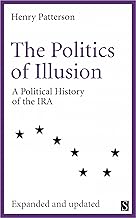
The Politics of Illusion: A Political History of Sinn Féin and the IRA
Description coming soon
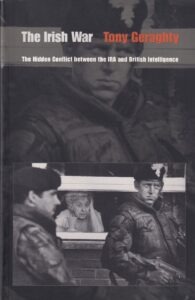
Ireland’s War: The Hidden Conflict Between the IRA and British Intelligence
Description coming soon
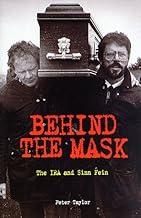
Behind the Mask: The Ira and Sinn Fein
Description coming soon
The Provisional IRA: From Insurrection to Parliament
Description coming soon
The Lost Revolution: The Story of the Official IRA and the Workers’ Party
Description coming soon
The IRA 1956–69: Rethinking the Republic
Description coming soon
The Provos: The IRA and Sinn Fein
Description coming soon
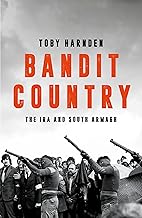
Bandit Country: The IRA and South Armagh
Description coming soon
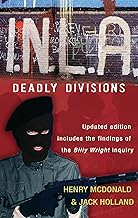
I.N.L.A – Deadly Divisions
Description coming soon
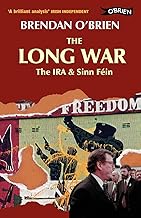
The Long War: The IRA and Sinn Fein
Description coming soon
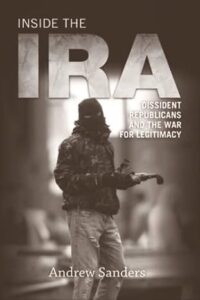
Inside the IRA: Dissident Republicans and the War for Legitimacy
Description coming soon
Killing Thatcher
Description coming soon
A Pocket History of the IRA
Description coming soon
The IRA
Description coming soon
The secret army
Description coming soon
Armed Struggle
Description coming soon
A secret history of the IRA
Description coming soon
The I.R.A
Description coming soon
Say Nothing
Description coming soon
The longest war
Description coming soon
Loyalist
<
>
After the Peace: Loyalist Paramilitaries in Post-Accord Northern Ireland
Description coming soon
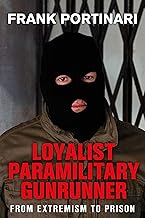
Loyalist Paramilitary Gunrunner: From Extremism to Prison
Description coming soon
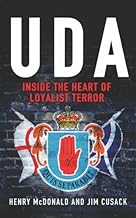
UDA: Inside the Heart of Loyalist Terror
Description coming soon
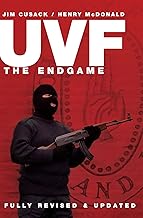
UVF – The Endgame
Description coming soon
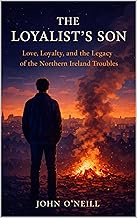
The Loyalist’s Son : Love, Loyalty, and the Legacy of the Northern Ireland Troubles
Description coming soon
A Directory of Loyalist Paramilitaries in Northern Ireland from 1965 – 2005
Description coming soon
Loyalists
Description coming soon
UVF: Behind the Mask
Description coming soon
Shankill Butchers by Martin Dillon
Description coming soon
British Army / Intelligence
<
>
The Special Air Service in Ireland [ SAS in Ireland]
Description coming soon
Low Intensity Operations: Subversion, Insurgency and Peacekeeping
Description coming soon
Operation Banner: The British Army in Northern Ireland, 1969 – 2007
Description coming soon
The British Army in Ulster (Vol 2)
Description coming soon
Intelligence Services in Northern Ireland: 1969-80: Spies and Surveillance in the Six Counties
Description coming soon
Paisley: Religion and Politics in Northern Ireland
Description coming soon
The Red Hand: Protestant Paramilitaries in Northern Ireland
Description coming soon
Big Boys’ Rules: The SAS and the Secret Struggle Against the IRA
The SAS describes its attitude to the use of lethal force as 'Big boys' games, big boys' rules'. Anyone caught with a gun or bomb can expect to be shot. In Big Boys' Rules: The SAS and the Secret Struggle Against the IRA Mark Urban meticulously explores the security forces' covert operations in Northern Ireland: from the mid-1970s, when they were stepped up, to the Loughall ambush in 1987, in which eight IRA Provisionals were killed. While charting the successes and failures of special operations during the troubles, Urban reveals the unenviable dilemmas faced by intelligence chiefs engaged in a daily struggle against one of the world's most sophisticated terrorist organisations.
'This is a book that needed to be written and which fulfils the essentials of any Ulster story; it expands understanding beyond fragmented jingoism and newspaper headlines.' John Stalker, Sunday Times
Brits
Description coming soon
Fifty Dead Men Walking
Description coming soon
Collusion / Dirty War
<
>

A State in Denial:: British Collaboration with Loyalist Paramilitaries
Description coming soon
Fishers of Men – The Gripping True Story of a British Undercover Agent in Northern Ireland
Description coming soon

Collusion With Injustice Ireland 1916 to 2016
Description coming soon
Northern Ireland: The Troubles: From The Provos to The Det
Description coming soon

Counterinsurgency and Collusion in Northern Ireland
Description coming soon

Stakeknife: Britain’s Secret Agents in Ireland
Description coming soon
Lethal Allies: British Collusion in Ireland
Description coming soon
Stakeknife’s Dirty War: The Inside Story of Scappaticci
Description coming soon
The Dirty War
Description coming soon
The Informer
Description coming soon
Four Shots in the Night
Description coming soon
The Conflict
<
>

Northern Ireland (Hot Spots in Global Politics)
Description coming soon
Northern Ireland: A Very Short Introduction
Description coming soon
The Hooded Men: British Torture in Ireland
Description coming soon
God and the Gun: The Church and Irish Terrorism
Description coming soon
The Trigger Men: Assassins and Terror Bosses in the Ireland Conflict
Description coming soon
A Very British Jihad
Description coming soon
Talking to Terrorists: A Personal Journey from the IRA to Al Qaeda
Description coming soon
Killing Rage
Description coming soon
Who Was Responsible for the Troubles?: The Northern Ireland Conflict
The Troubles claimed the lives of almost four thousand people in Northern Ireland, most of them civilians; forty-five thousand were injured in bombings and shootings. Relative to population size this was the most intense conflict experienced in Western Europe since the end of the Second World War.
The central question posed in this book is fundamental, yet it is one that has rarely been asked: Who was primarily responsible for the prosecution of the Troubles and their attendant toll of the dead, the injured, and the emotionally traumatized? Liam Kennedy, who lived in Belfast throughout most of the conflict, was long afraid to raise the question and its implications. After years of reflection and research on the matter he has brought together elements of history, politics, sociology, and social psychology to identify the collective actors who drove the conflict onwards for more than three decades, from the days of the civil rights movement in the late 1960s to the signing of the Good Friday Agreement in 1998.
The Troubles in Northern Ireland are a world-class problem in miniature. The combustible mix of national, ethnic, and sectarian passions that went into the making of the conflict has its parallels today in other parts of the world. Who Was Responsible for the Troubles? is an original and controversial work that captures the terror and the pain but also the hope of life and the pursuit of happiness in a deeply divided society.
The Troubles claimed the lives of almost four thousand people in Northern Ireland, most of them civilians; forty-five thousand were injured in bombings and shootings. Relative to population size this was the most intense conflict experienced in Western Europe since the end of the Second World War.
The central question posed in this book is fundamental, yet it is one that has rarely been asked: Who was primarily responsible for the prosecution of the Troubles and their attendant toll of the dead, the injured, and the emotionally traumatized? Liam Kennedy, who lived in Belfast throughout most of the conflict, was long afraid to raise the question and its implications. After years of reflection and research on the matter he has brought together elements of history, politics, sociology, and social psychology to identify the collective actors who drove the conflict onwards for more than three decades, from the days of the civil rights movement in the late 1960s to the signing of the Good Friday Agreement in 1998.
The Troubles in Northern Ireland are a world-class problem in miniature. The combustible mix of national, ethnic, and sectarian passions that went into the making of the conflict has its parallels today in other parts of the world. Who Was Responsible for the Troubles? is an original and controversial work that captures the terror and the pain but also the hope of life and the pursuit of happiness in a deeply divided society.
Fifty Years On: The Troubles and the Struggle for Change in Northern Ireland
In 1969, an eruption of armed violence traumatized Northern Ireland and transformed a period of street protest over civil rights into decades of paramilitary warfare by republicans and loyalists.
In this evocative memoir, Malachi O'Doherty not only recounts his experiences of living through the Troubles, but also recalls a revolution in his lifetime. However, it wasn't the bloody revolution that was shown on TV but rather the slow reshaping of the culture of Northern Ireland - a real revolution that was entirely overshadowed by the conflict.
Incorporating interviews with political, professional and paramilitary figures, O'Doherty draws a profile of an era that produced real social change, comparing and contrasting it with today, and asks how frail is the current peace as Brexit approaches, protest is back on the streets and violence is simmering in both republican and loyalist camps.
The Year of Chaos: Northern Ireland on the Brink of Civil War, 1971-72
'Frank and incisive - an insightful look at the most tumultuous period of the Troubles.' Ian Cobain
'This is the Belfast I grew up in. Malachi writes from first-hand experience and brings back memories that will always resonate with those who lived in those times.' Eamonn Holmes
In the eleven months between August 1971 and July 1972, Northern Ireland experienced its worst year of violence. No future year of the Troubles experienced such death and destruction.
The 'year of chaos' began with the introduction of internment of IRA suspects without trial, which created huge disaffection in the Catholic communities and provoked an escalation of violence. This led to the British government taking full control of Northern Ireland and negotiating directly with the IRA leadership. Operation Motorman, the invasion of barricaded no-go areas in Belfast and Derry, then dampened down the violence a year later.
During this whole period, Malachi O'Doherty was a young reporter in Belfast, working in the city and returning home at night to a no-go area behind the barricades where the streets were patrolled by armed IRA men.
Drawing on interviews, personal recollections and archival research, O'Doherty takes readers on a journey through the events of that terrible year - from the devastation of Bloody Sunday and Bloody Friday to the talks between leaders that failed to break the deadlock - which, he argues, should serve as a stark reminder of how political and military miscalculation can lead a country to the brink of civil war.
We wrecked the place : contemplating an end to the Northern Irish troubles
Description coming soon
God and the Gun: The Church and Irish Terrorism
Description coming soon
Hope Against History: Course of the Ulster Conflict, 1966-99
Description coming soon
The Troubles: Ireland’s Ordeal 1966–1995 and the Search for Peace
Description coming soon
Image Coming Soon
Spirit of ’68
Description coming soon
Image Coming Soon
Conflicts in the north of Ireland, 1900-2000
Description coming soon
Image Coming Soon
BELFAST: SEGREGATION, VIOLENCE AND THE CITY
Description coming soon
Belfast’s unholy war
Description coming soon
The Troubles in Northern Ireland (Troubled World)
Description coming soon
The Troubles in Northern Ireland (Witness to History)
Description coming soon
Image Coming Soon
The Northern Ireland troubles
Description coming soon
Northern Ireland’s troubles
Description coming soon
Northern Ireland
Description coming soon
Peace Process
<
>
The Politics of Northern Ireland: Beyond the Belfast Agreement
Description coming soon
Hope and History: Making Peace in Ireland
Description coming soon
The Management of Peace Processes
Description coming soon

A Farther Shore: Ireland’s Long Road to Peace
Description coming soon

The Troubles: Ireland’s Ordeal 1966–1995 and the Search for Peace
Description coming soon
The Anglo-Irish Agreement
Description coming soon
Peace In Ireland: The War of Ideas
Peace in Ireland is a classic study of the Northern Ireland Troubles which examines the events of 1968–2003 in broad historical perspective, including an exploration of the ideological roots of the conflict in the late nineteenth and early twentieth centuries. It covers the decisive episodes that marked the trajectory of the Troubles, from the Civil Rights Movement, Bloody Sunday and the Sunningdale Agreement, to the hunger strikes, the paramilitary ceasefires and the Good Friday Agreement.
The book exposes the assumption that the conflict was a product of imperialism, and challenges the idea that the descent into violence was brought about by atavistic regression or ethnic solidarity. Its central argument is that the Northern Ireland debacle was a distinctly modern conflict, fought over rival aspirations to popular sovereignty. Accordingly, the book places opposing conceptions of democratic legitimacy at the centre of the dispute. From this angle, it analyses both Nationalism and Republicanism as well as Unionism and Loyalism with the aim of providing a sustained investigation of the impact of political ideas on modern Ireland.
Northern Ireland: The Fragile Peace
After two decades of relative peace following the Good Friday Agreement of 1998, the Brexit referendum in 2016 reopened the Northern Ireland question. In this thoughtful and engaging book, Feargal Cochrane considers the region’s troubled history from the struggle for Irish independence in the nineteenth century to the present. New chapters explain the reasons for the suspension of devolved government at Stormont in 2017 and its restoration in 2020 as well as the consequences for Northern Ireland of Britain’s decision to leave the European Union. Providing a complete account of the province’s hundred-year history, this book is essential reading to understand the present dimensions of the Northern Irish conflict.
The Northern Ireland Peace Process: Ending the Troubles
Description coming soon
Urban peace-building in divided societies
Description coming soon
Image Coming Soon
The peacebuilding elements of the Belfast Agreement and the transformation of the Northern Ireland conflict
Description coming soon
The First Northern Ireland Peace Process
Description coming soon
Personal Accounts
<
>

Home Rule
Description coming soon

Making Sense of the Troubles: A History of the Northern Ireland Conflict
Description coming soon
The Irish Story
Description coming soon

Belfast: An Illustrated History
Description coming soon

A Short History of Ulster
Description coming soon
The Shape of Irish History
Description coming soon
Ireland: The Propaganda War – The British Media and the Battle for Hearts and Minds
Description coming soon
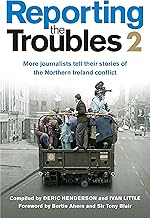
Reporting the Troubles 2: More journalists tell their stories of the Northern Ireland conflict
'I am sometimes asked to identify the most important story that I dealt with while I was editor of the Irish Times … I answer that the most important story was not published in a single day but over years. And it was not put together by any one journalist but by a whole cohort of reporters, photographers, feature writers and editors … For the most part they just got by-lines and the satisfaction of knowing that what they were doing was important, that the story had to be told, day by day, hour by hour. And that telling it could make a difference. It is difficult to imagine that there could ever have been a peace process without that.’
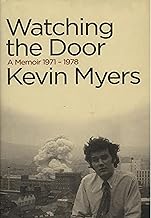
Watching The Door: A Memoir 1971-1978
As an Irish Catholic raised in Leicester, fresh from University College Dublin with a first in History, Kevin Myers is sent north to work for the Belfast bureau of RTE News. There he covers the increasingly vicious conflict erupting in the city as the IRA campaign begins. Reporting too for Dublin's Hibernia, the London Observer and NBC Radio for North America, Kevin Myers becomes the eyes and ears for an uncomprehending world, chronicling the collapse of Northern Irish society, from internment to the La Mon bombing. Raw, candid and courageous, Watching the Door documents the deeds of loyalist gangs, provos, paratroopers, politicians, British agents and an indomitable citizenry, forming a remarkable double portrait of a divided society and an emergent self – a witness to humanity, and inhumanity, on both sides of a sectarian faultline. In his wonderfully vivid, trenchant, first-hand account of life on the streets of Belfast during the height of the Troubles, a young Kevin Myers witnesses the blood fueds and chaos of a people on the brink of civil war. His descriptions of violence, counter-violence and emotional free-fall, combine humour with reflection, eros with thanatos; they render history in the making. By interweaving the political and the personal in a tale at once self-deprecating, poignant and sexually buoyant, Watching the Door is a coming-of-age story like no other. It is evocative and passionate, and it records a pivotal time in Ireland's recent past, blending articulacy with savage indignation in a classic of modern reportage.
Living through the conflict
Description coming soon
Origins / Civil Rights
<
>

Ireland’s War of Independence 1919-21: The IRA’s Guerrilla Campaign
Description coming soon
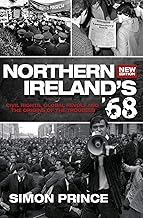
Northern Ireland’s ’68: Civil Rights, Global Revolt and the Origins of the Troubles
Description coming soon

1916: The Easter Rising
Description coming soon

The Rising (New Edition): Ireland: Easter 1916
Description coming soon
The Irish War of Independence
Description coming soon
Ireland Since 1939: the Persistence of Conflict
Description coming soon
The Border: The Legacy of a Century of Anglo-Irish Politics
Shortlisted for the An Post Irish Book Awards Non-Fiction Book of the Year 2019
'Anyone who wishes to understand why Brexit is so intractable should read this book. I can think of several MPs who ought to.' The Times
For the past two decades, you could cross the border between Northern Ireland and the Republic half a dozen times without noticing or, indeed, turning off the road you were travelling. It cuts through fields, winds back-and-forth across roads, and wends from Carlingford Lough to Lough Foyle. It is frictionless - a feat sealed by the Good Friday Agreement. Before that, watchtowers loomed over border communities, military checkpoints dotted the roads, and smugglers slipped between jurisdictions. This is a past that most are happy to have left behind but might it also be the future?
The border has been a topic of dispute for over a century, first in Dublin, Belfast and Westminster and, post Brexit referendum, in Brussels. Yet, despite the passions of Nationalists and Unionists in the North, neither found deep wells of support in the countries they identified with politically. British political leaders were often ignorant of the conflict's complexities, rarely visited the border, and privately disliked their erstwhile unionist allies. Southern leaders' anti-partition statements masked relative indifference and unofficial cooperation with British security services.
From the 1920 Government of Ireland Act that created the border, the Treaty and its aftermath, through the Civil Rights Movement, Thatcher, the Troubles and the Good Friday Agreement up to the Brexit negotiations, Ferriter reveals the political, economic, social and cultural consequences of the border in Ireland. With the fate of the border uncertain, The Border is a timely intervention by a renowned historian into one of the most contentious and misunderstood political issues of our time.
How the Troubles Came to Northern Ireland (Contemporary History in Context)
Description coming soon
Society / Segregation
<
>

The Scot in Ulster: Sketch of the History of the Scottish Population of Ulster
Description coming soon

Northern Ireland and the politics of boredom: Conflict, capital and culture
Description coming soon

Peace and Ethnic Identity in Northern Ireland
Description coming soon
Identity and Violence: The Illusion of Destiny
Description coming soon

Irish History Matters: Politics, Identities and Commemoration
Description coming soon
Breaking Enmities: Religion, Literature and Culture in Northern Ireland, 1967-1997
This book discusses relationships among religion, literature and ethnicity in Northern Ireland since 1967. The introduction provides a theoretical account of how literature engages sectarian prejudices, allowing these to be played out in ways that can help to dissolve or mitigate the alienating effects of traditional enmities. Subsequent chapters deal with identity, endogamy, education, gender, and imprisonment. Each chapter combines an analysis of specific cultural issues with a critical assessment of relevant works by key authors. A conclusion offers an assessment of relationships between Northern Ireland and other modern societies facing analogous problems in a post-modern world marked by rapid globalisation.