





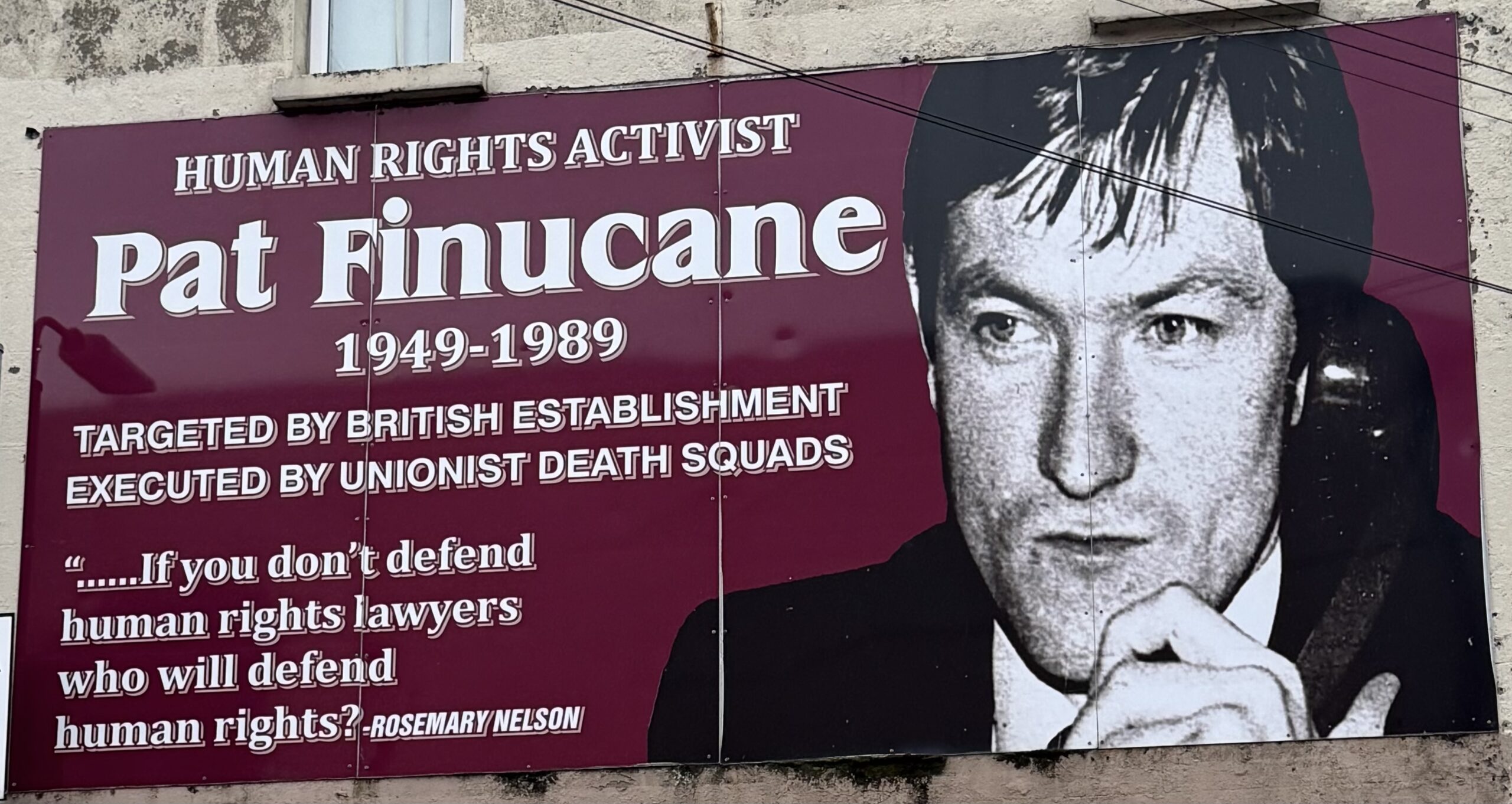
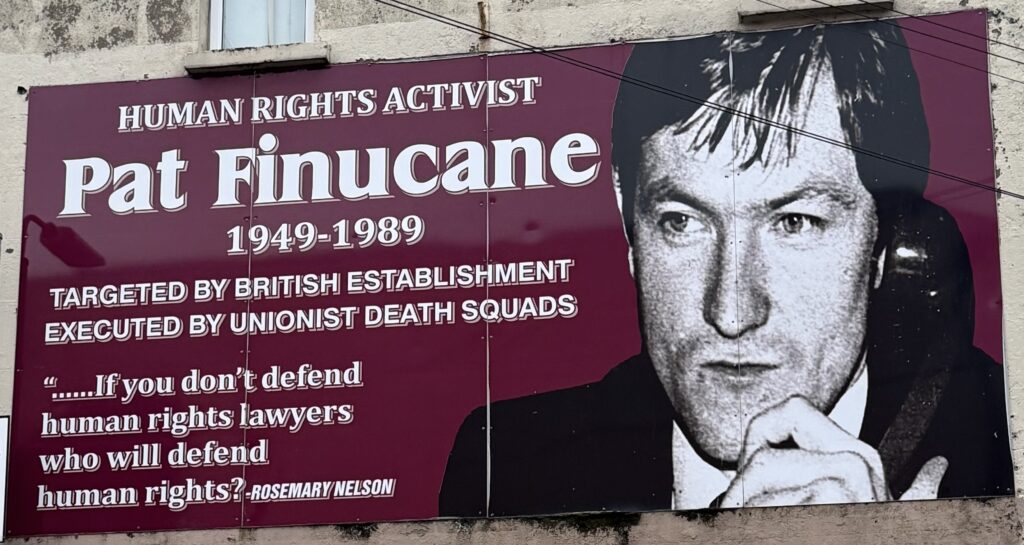
A long-awaited public inquiry into the murder of Belfast solicitor Pat Finucane will seek to identify and examine the actions of “all those involved” in the killing, according to officials overseeing the investigation.
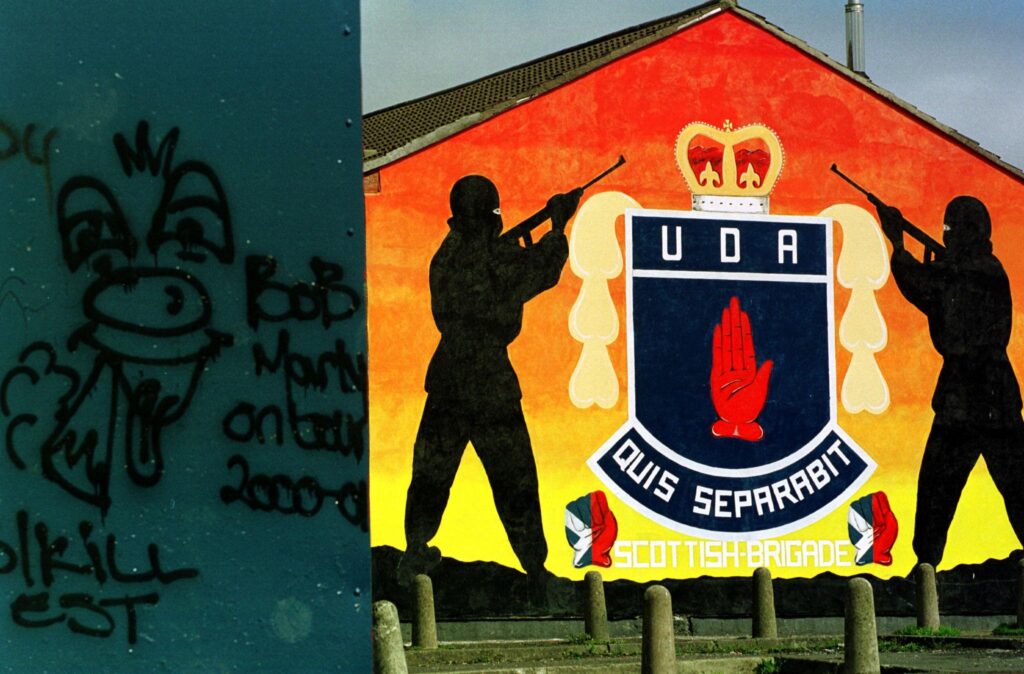
Finucane was shot dead in February 1989 inside his north Belfast home while having dinner with his family. The attack was carried out by gunmen from the Ulster Defence Association (UDA), one of the largest loyalist paramilitary organisations active during the conflict in Northern Ireland/The North.
His killing quickly became one of the most controversial cases of the Troubles because of long-standing allegations that state agents may have been involved in or facilitated the attack.
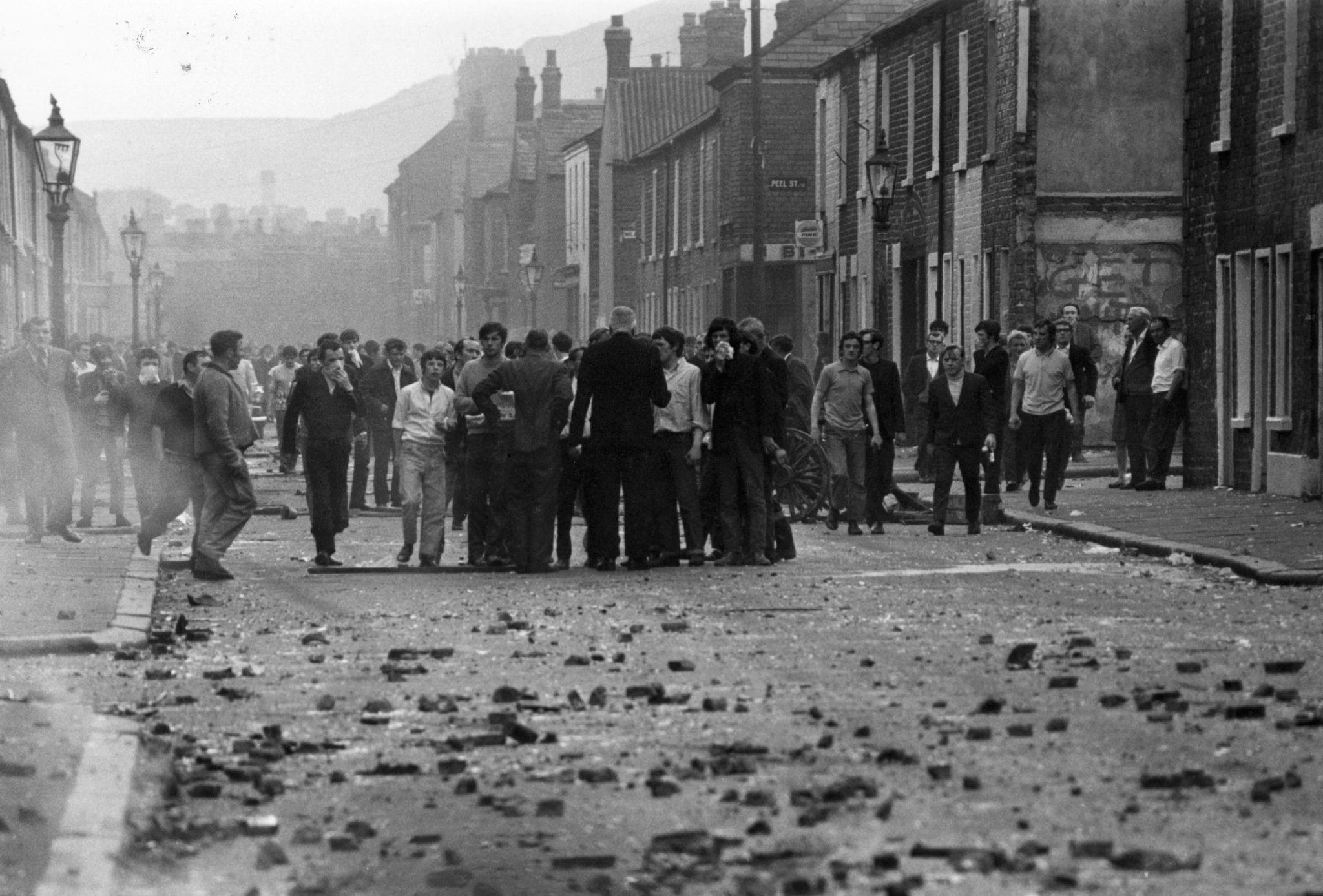
Over the years, multiple investigations and reports have examined the circumstances surrounding Finucane’s death, including the 2012 review by Desmond de Silva, which concluded that there had been “shocking levels of collusion” between loyalist paramilitaries and members of the security forces.
The new inquiry is expected to go further, examining the actions of a wide range of individuals and institutions connected to the case.
Officials say the investigation will explore not only the planning and execution of the killing but also the intelligence handling, security force operations, and the broader context in which the attack took place.
The inquiry will operate under the Inquiries Act 2005, giving it significant powers to examine documents, call witnesses and review evidence that may not previously have been publicly available.
For the Finucane family, the inquiry represents the latest chapter in a decades-long campaign to establish the full truth about what happened.
Relatives have consistently argued that previous reviews did not go far enough and that only a full public inquiry could properly examine the evidence.
The murder of Pat Finucane has long been regarded as one of the most politically sensitive cases from the conflict.
As a defence solicitor, Finucane represented a number of clients connected to republican organisations, which made him a controversial figure during the violence of the 1980s. His supporters, however, have always maintained that he was targeted simply for carrying out his professional duties as a lawyer.
International attention has also surrounded the case for many years.
Human rights organisations and legal bodies have repeatedly called for a full public inquiry, arguing that the circumstances of the killing raise serious questions about the conduct of state agencies during the conflict.
The inquiry is expected to examine intelligence files, operational decisions and communications that may shed new light on the events leading up to the attack.
It will also review the role played by loyalist paramilitary figures who were directly involved in the murder.
Officials say the central goal is to establish the fullest possible account of what happened, including how the attack was planned, who participated in it, and what knowledge may have existed within official structures beforehand.
For many observers, the investigation will test the extent to which decades-old cases from the conflict can still be examined in detail.
The process is expected to take considerable time, given the complexity of the evidence and the historical nature of the events involved.
For the Finucane family, however, the inquiry represents something they have sought for more than thirty years – the opportunity for the circumstances of Pat Finucane’s murder to be examined in full view of the public.

Have a story you want to write yourself? Join Commentators Corner and write the news you want known - troubles/legacy or whatever is important to you.
Join Commentators CornerMore Stories - Click To View
The Largest Archive Of Troubles Media Ever Built
Explore thousands of documentaries, rare footage and banned material from the Troubles - preserved, organised and accessible in one place. Over 70,000 already follow ATL. Now go deeper.
Open The ATL Archive