
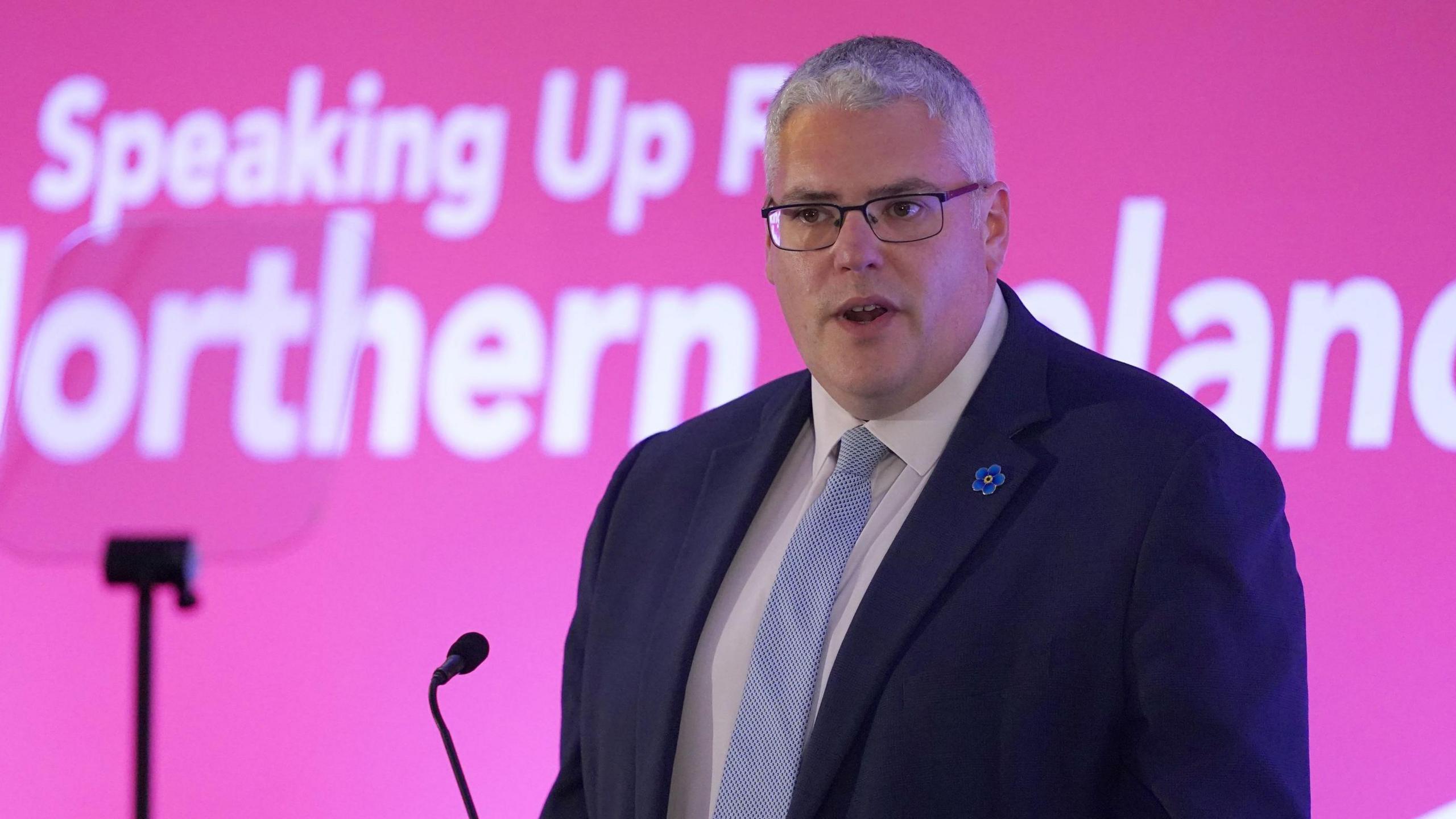

The leader of the Democratic Unionist Party, Gavin Robinson, has accused the Irish government of failing victims of the Troubles after it emerged that Irish police have refused requests to share information about several killings.
The criticism follows confirmation that An Garda Síochána – the police service in the Republic of Ireland – rejected a number of information requests from the Independent Commission for Reconciliation and Information Recovery (ICRIR).
The requests are understood to relate to a number of killings connected to the conflict in Northern Ireland/The North.
The ICRIR was created by the UK government to examine unresolved deaths from the Troubles and to provide information to families seeking answers about how their relatives were killed.
However, the refusal by gardaí to release certain information has prompted criticism from unionist politicians who argue the decision undermines efforts to assist victims and their families.
Gavin Robinson said the decision has caused frustration among those seeking truth about killings that took place during the conflict.
“Victims are perturbed at the refusal to share information,” he said.
“Whilst we hear from Irish politicians continually that they’re interested in satisfying the requests of victims, actions speak louder than words.”
Robinson added that the Irish government had “never satisfied one request” for information relating to the cases in question.
The criticism comes amid continuing controversy over the role and structure of the ICRIR, which was established under the Northern Ireland Troubles (Legacy and Reconciliation) Act 2023.
The legislation has been strongly opposed by several political parties, victims’ groups and the Irish government.
Responding to the criticism, Helen McEntee defended the actions of the Irish government.
She said the decision not to share information was based on legal concerns surrounding the structure of the ICRIR.
“I don’t think we have hidden this,” she said.
The minister added that court rulings had found the structure of the commission was not human rights compliant, which she said explained why requests had been rejected.
“It is for that reason and that reason alone,” she said when asked why information had not been provided.
Despite the dispute, McEntee said the Irish government remains committed to supporting efforts to address unresolved legacy issues.
She also pointed to legislation currently moving through Westminster which would replace the existing commission with a new legacy body.
“We will make sure our own legislation is in place in situ when the UK legislation is passed,” she said.
A spokesperson for the ICRIR confirmed that discussions have taken place between Justin Kelly and Sir Declan Morgan regarding the sharing of information.
However, the commission said resolving the issue ultimately remains a matter for both governments.
The disagreement highlights the ongoing political tension surrounding how the legacy of the Troubles should be addressed.
While many families continue to seek answers about the deaths of their loved ones, disagreements between London, Dublin and local political parties continue to shape how legacy investigations are carried out.