






Sinn Féin Support Slumps As Grassroots Frustration Grows Over ‘Soft’ Stormont Approach
Support for Sinn Féin has fallen to its lowest level in five years, according to a new poll, as internal frustration grows over how the party is handling power at Stormont and its approach to the DUP.
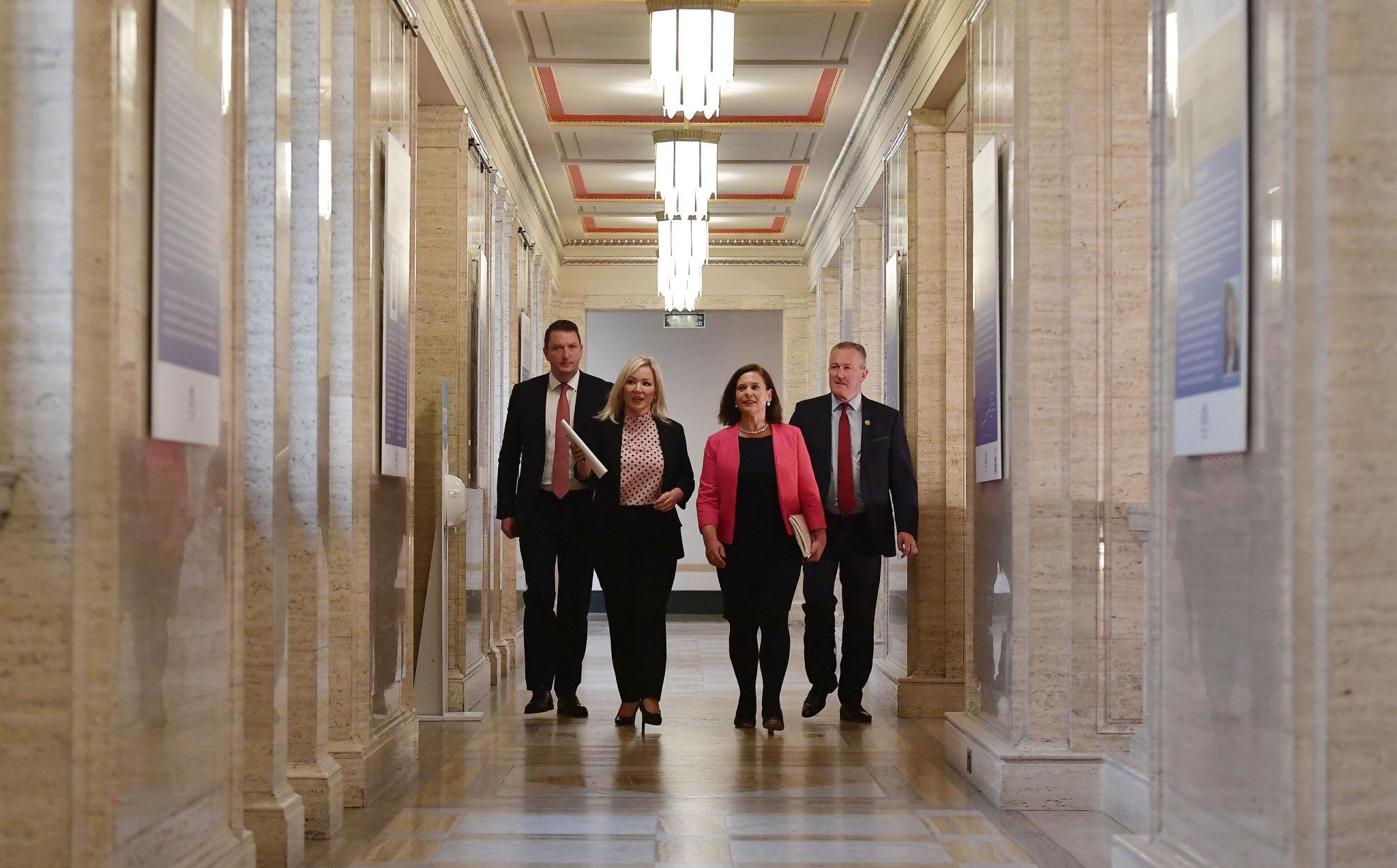
The latest figures show a clear drop in backing for the party, alongside a significant shift in leadership preference, with SDLP leader Claire Hanna now overtaking First Minister Michelle O’Neill as the most popular nationalist leader.
At the same time, criticism is intensifying from within Sinn Féin’s own base, with concerns that the party’s leadership has become too cautious since returning to government.
The issue centres on how Sinn Féin has operated at Stormont since Michelle O’Neill became First Minister – a historic moment that marked the first time a nationalist held the role.
But while that milestone was seen as a breakthrough, it has not translated into the political shift many supporters expected.
Instead, there is a growing sense among grassroots supporters that Sinn Féin has opted for stability over confrontation, choosing to manage Stormont rather than challenge the DUP directly on key issues.
That frustration is now beginning to show in the polling.
The drop in support suggests that a section of the nationalist electorate is becoming disillusioned, particularly those who expected a more assertive approach on issues such as Irish unity, legacy matters, and cultural disputes.
Claire Hanna’s rise in leadership preference reflects that shift.
As leader of the SDLP, she is seen by some voters as offering a clearer or more direct voice, particularly at a time when Sinn Féin’s leadership is being viewed as restrained.
This creates a new dynamic within nationalism.
For years, Sinn Féin has dominated the nationalist vote, but the combination of slipping support and rising competition suggests that position may now be under pressure.
The criticism from within Sinn Féin’s own base is particularly significant.
It points to a disconnect between leadership strategy and grassroots expectations, where supporters who once backed a more confrontational political style now feel the party has softened its approach.
That tension is not just political – it is strategic.
Sinn Féin’s leadership appears focused on maintaining the institutions at Stormont and projecting stability, particularly in a power-sharing environment that remains fragile.
But that approach comes with a cost.
The more the party avoids confrontation, the more it risks being seen as part of the system rather than a force challenging it.
For some supporters, that represents a fundamental shift in what Sinn Féin stands for.
For others, it may be a necessary evolution in order to maintain influence and avoid political deadlock.
What is now clear is that both stories – falling poll numbers and internal criticism – are part of the same trend.
A party that has reached the top of power is now facing the pressure that comes with it.
And for Sinn Féin, the question is no longer just about gaining power.
It is about whether holding it is beginning to cost them support.

Have a story you want to write yourself? Join Commentators Corner and write the news you want known - troubles/legacy or whatever is important to you.
Join Commentators CornerMore Stories - Click To View


The Largest Archive Of Troubles Media Ever Built
Explore thousands of documentaries, rare footage and banned material from the Troubles - preserved, organised and accessible in one place. Over 70,000 already follow ATL. Now go deeper.
Open The ATL Archive